Immigration Law | Naturalization & Citizenship | United States
Hardam Tripathi | TripLaw | Published October 28, 2026 | Updated October 28, 2026
Selective Service Registration And U.S. Citizenship Eligibility
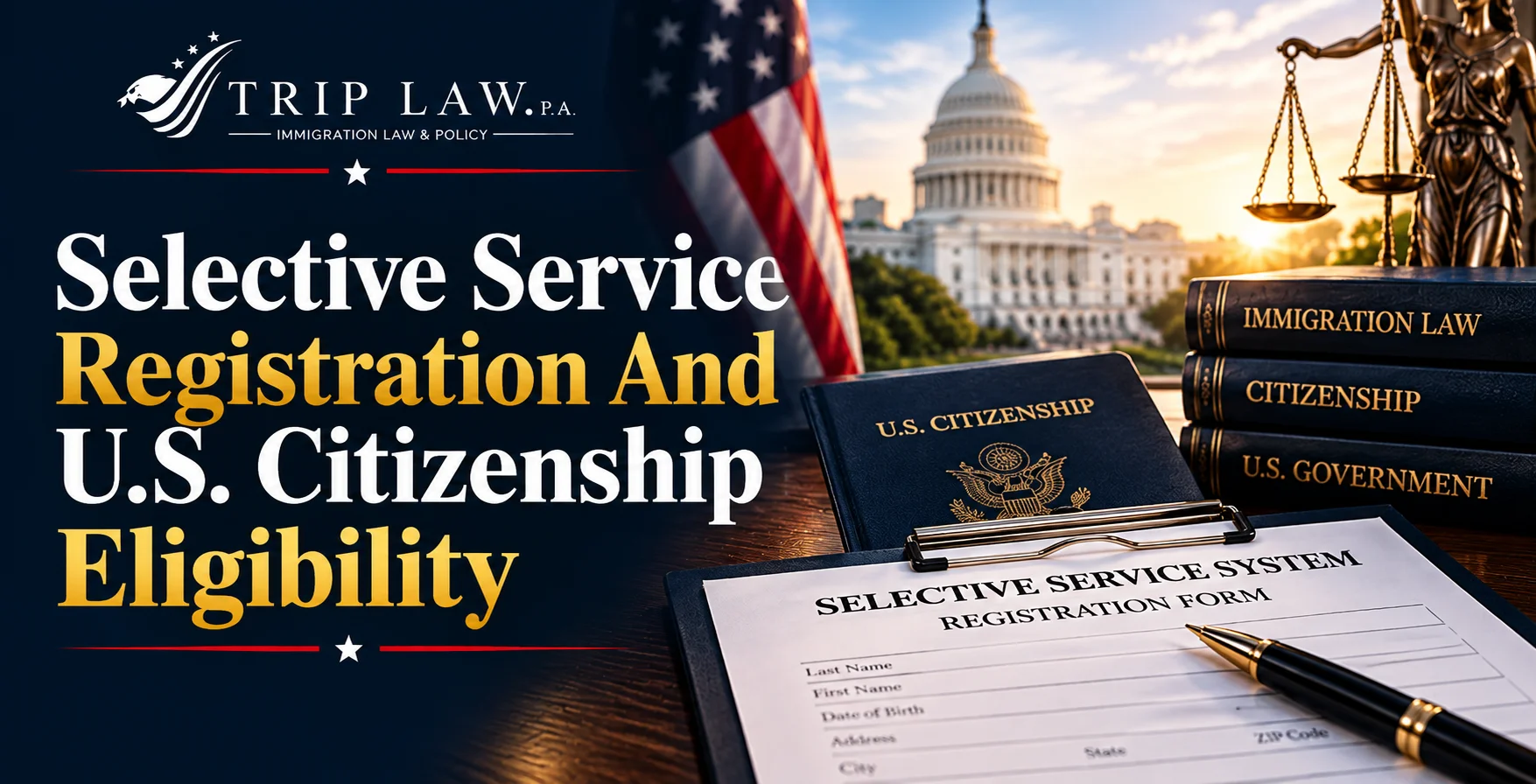
An essential legal guide explaining how Selective Service registration requirements impact naturalization and U.S. citizenship eligibility.
Most men who have been in the U.S. between ages 18 and 25 are required to register with the Selective Service so that they can be eligible for U.S. citizenship. When you apply for citizenship, the U.S. Citizenship and Immigration Services (USCIS) looks at your record of registration to see whether you have “good moral character” and an attachment to the principles of the U.S. Constitution.
Key Takeaways
- Undocumented men can still have registration duties.
- Men cannot register after turning 26.
- Your immigration history can explain nonregistration.
- Selective Service stopped status letters in June 2026.
- You must verify your current record before you submit naturalization paperwork.
What Is Selective Service Registration?
Selective Service Registration creates a federal registry. The registry covers men who may face military service. A future draft would require presidential and congressional action. Registration itself does not mean military service. The Selective Service System maintains this registry. The Military Selective Service Act governs this program. Current rules cover men aged 18 through 25.
You should understand one important distinction. Registration is not the same as joining the military. A registered person does not automatically enter military service. No current draft exists. A draft would require separate government action.
Who Must Register For Selective Service?
Eligible men must complete registration. This requirement includes ages 18 through 25. Some immigration statuses create exceptions.
The rules generally cover:
- Male U.S. citizens.
- Male permanent residents.
- Male undocumented immigrants.
- Certain other male immigrants.
- Male dual citizens living abroad.
Undocumented men can still have a registration duty. Nonimmigrant visa holders generally have an exception. The Selective Service System also confirms overseas obligations. U.S. citizens living abroad can register. Dual citizens may also need registration.
Figure 1: Selective Service Registration Requirement by Category
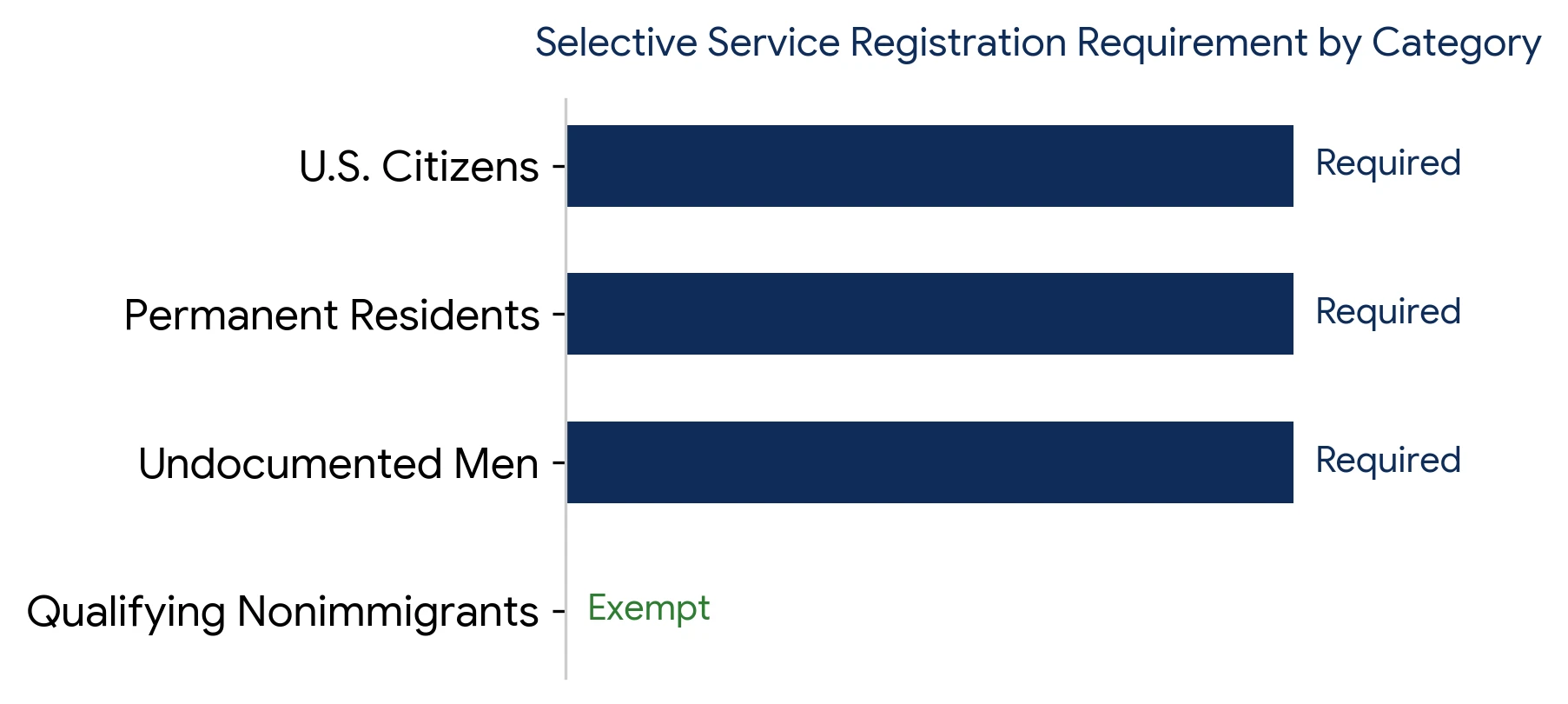
Figure 1: Selective Service Registration Requirements across U.S. Citizens, Permanent Residents, Undocumented Men, and Nonimmigrant Visa Categories.
Which immigrants skip registration?
Certain nonimmigrants do not need Selective Service registration. Immigration status matters when determining your obligation. For example, a man present under qualifying nonimmigrant status may be exempt. However, undocumented men generally remain subject to registration.
Age also matters significantly. If you entered America after turning 26, registration generally was not required. This can become important during naturalization.
How Does Selective Service Affect U.S. Citizenship?
Failure to register can complicate your naturalization case. USCIS considers registration when reviewing certain male applicants. USCIS specifically addresses Selective Service in Form N-400 instructions. Applicants must disclose whether registration was required. They must also explain certain failures.
The concern becomes stronger when nonregistration was knowing and willful. Such conduct can affect good moral character. It can also affect constitutional attachment requirements. Therefore, do not ignore a registration issue. You should investigate your record before filing Form N-400.
Need Guidance on Your Citizenship Application?
Navigating Selective Service requirements and Form N-400 can be complex. Ensure your naturalization path is clear before you file.
What Happens If You Failed To Register?
The consequences depend heavily on your age. Men under 26 can generally correct the problem through registration. Men over 26 cannot register late. If you are still under 26, act quickly. Selective Service accepts late registration until age 26.
If you are already 26 or older, the situation changes. You cannot complete a new registration. Instead, you may need evidence explaining your circumstances. The receiving agency makes the final benefit decision. This distinction is especially important for naturalization applicants.
Does Not Registering Automatically Deny Citizenship?
No, nonregistration does not always mean automatic citizenship denial. USCIS examines the circumstances surrounding the failure. The key issue can involve whether your failure was knowing and willful. USCIS also evaluates good moral character.
For example, you may have misunderstood your registration obligation. You may have entered America after the relevant age. You may also have held an exempt immigration status. Evidence can help explain your situation. You should therefore avoid assuming that one missed registration ends your case.
What Evidence Can Help Explain Nonregistration?
Your evidence should show why registration was not completed. The best evidence depends on your personal immigration history.
Useful records can include:
- Immigration entry records.
- Visa documentation.
- Permanent resident records.
- Selective Service verification records.
- Address history.
- Written explanations.
- Other documents supporting your circumstances.
You should keep your explanation factual. Avoid guessing about your past immigration status. USCIS evaluates naturalization eligibility using multiple requirements. Selective Service is only one part of that review.
| Age Group / Status | Registration Duty | Action Required for N-400 |
|---|---|---|
| Ages 18 – 25 | Mandatory (Citizens, LPRs, Undocumented) | Register immediately online before age 26 |
| Age 26 or Older | Closed (Late registration not accepted) | Provide evidence explaining non-willful failure |
| Nonimmigrant Visa Holders | Exempt while maintaining valid status | Submit visa records showing exempt status during 18-25 |
What Changed For Selective Service Status Letters In 2026?
The Selective Service System ended status letters on June 30 2026. This is an important current change for naturalization applicants. Older immigration guides may mention status information letters. Current Selective Service guidance says those letters are no longer issued.
Applicants can instead verify registration online. They can also review Selective Service requirements. Supporting evidence may help explain why registration was not required. This update makes current information especially important. Do not rely on older immigration checklists without checking dates.
Effective June 30, 2026, the Selective Service System ceased issuing Status Information Letters (SIL), directing applicants and agencies to verify records directly via official digital portals and supporting status documentation.
How Can You Check Your Selective Service Registration?
You can verify your registration through the Selective Service website. The system allows registered men to access their registration information. You may need your Social Security number. Your registration record can show your Selective Service number. It can also show your registration date.
If you registered previously, keep proof for your records. If you recently received an SSN, database updates may take time. Selective Service recommends contacting the agency when registration problems occur.
How Can You Register With Selective Service?
Eligible men ages 18 through 25 should register promptly. Online registration is available through Selective Service.
You generally provide:
- Your full name.
- Your date of birth.
- Your home address.
- Your Social Security number.
If you lack an SSN, other registration options exist. Selective Service provides printable registration forms. After registering, verify your record. Keeping proof can prevent future confusion.
Does Selective Service Registration Mean You Will Serve?
No, registration does not mean automatic military service. Registration creates a pool for possible future use. A draft would require additional government action. Registration alone does not place you into active military service.
Some men also misunderstand medical exemptions. Medical conditions generally do not remove the registration requirement. Draft exemptions and registration requirements are separate issues. Therefore, do not skip registration based on assumptions.
What Other Benefits Can Depend On Registration?
Selective Service registration can affect benefits beyond immigration. Some federal and state programs use registration requirements.
Possible areas include:
- Certain federal employment.
- Federal job training.
- Some state education benefits.
- Certain other government benefits.
Specific rules vary by program and jurisdiction. The agency providing the benefit makes the final decision. This means registration can have broader consequences. Applicants must verify requirements. Benefits require prior verification.
What Should Naturalization Applicants Do Before Filing?
Check your Selective Service record. Submit Form N-400 later. Early review reveals problems. USCIS reviews your application.
Use this practical process:
- Check whether registration was required.
- Verify your Selective Service record.
- Review your immigration entry history.
- Identify any registration gap.
- You gather supporting evidence.
- You check N-400 responses.
Doubts require legal advice.
Form N-400 demands accurate details. Crucial eligibility questions require accuracy. Convenience never justifies wrong answers. Provide correct information.
Conclusion
Immigration requirements can change with new policies. Your individual history can also change the answer. Therefore, do not rely on outdated checklists.
At Trip Law, we help you understand important immigration information clearly. We make complex requirements easier to follow. We also help you identify questions worth addressing early.
When your citizenship journey matters, clarity matters too. Let us help you communicate with confidence. Reach out to Trip Law today.
Ready to Take the Next Step in Your Citizenship Journey?
At Trip Law, we bring clarity to complex requirements. Reach out to our team today to ensure your application is built on accurate, up-to-date details.
Protecting Your Path to U.S. Citizenship
Trip Law provides strategic, reliable guidance for Form N-400 naturalization applications, Selective Service record issues, and immigration proceedings across the United States.
Call (863) 599-6735
1543 Lakeland Hills Blvd, Ste. 17, Lakeland, FL 33805
Free Consultation | trip-law.com
Frequently Asked Questions (FAQs)
Common Questions About Selective Service & U.S. Citizenship Eligibility
Is Selective Service Registration Required For Citizenship?
Selective Service registration can be required for male immigrants. If registration applied to you, failing to register may affect naturalization. Your age affects the analysis. Your status changes this evaluation. Individual circumstances alter the outcome.
Does Selective Service Registration Guarantee U.S. Citizenship?
Registration never ensures citizenship. Naturalization demands multiple qualifications. USCIS checks applicant residence. Officers evaluate moral character. USCIS tests English skills. Officials review civics knowledge. USCIS enforces statutory requirements.
Can Immigrants Register For Selective Service?
Yes, many male immigrants can and must register. Eligible immigrants complete registration from ages 18 through 25. Immigration status decides exceptions.
Can I Register After Turning 26?
Generally, no. Selective Service accepts late registration only until age 26. After that point, you must address your circumstances differently.
What If I Forgot To Register?
Your response depends on your current age. Men under 26 should register immediately. Older applicants should document why registration did not occur.
Does Selective Service Registration Mean I Join The Army?
No, registration does not enlist you in the military. It places your information into the federal registry. A future draft would require additional government action.
Do Women Need Selective Service Registration?
Current federal law requires registration for male persons. The Selective Service requires congressional action. Congress must change the law.
Do undocumented immigrants need registration?
The rule usually covers men aged 18 to 25. Selective Service specifically includes undocumented men, except qualifying nonimmigrant visa holders.
What Changed With Status Information Letters?
Selective Service ended status information letters on June 30 2026. Applicants should now verify registration and provide relevant supporting evidence.
Disclaimer
This blog is for informational purposes only. If you want to know anything in details, please contact Trip Law.