Immigration Law | Lakeland, Florida
Hardam Tripathi | TripLaw | Published July 8, 2026 | Updated July 8, 2026
Common Reasons Immigration Applications Get Denied and How to Avoid Them
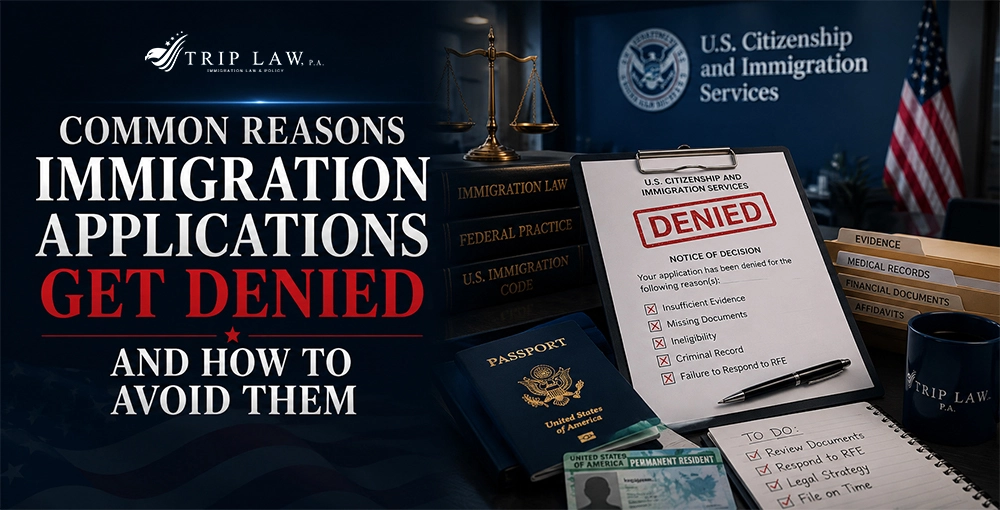
Professional immigration law graphic explaining the most common reasons U.S. immigration applications are denied, including insufficient evidence, missing documents, ineligibility, criminal records, and failure to respond to Requests for Evidence (RFE). The image highlights the importance of proper documentation, legal preparation, and experienced immigration attorney guidance to improve application success and avoid costly delays or denials.
Immigration applications get denied for a few repeat reasons. Missing documents, weak evidence, prior violations, criminal history, and missed deadlines top the list. USCIS denied about 11% of all cases last year. Most of those denials were preventable with better preparation.
Key Takeaways
- Missing documents cause more denials than any other single reason.
- USCIS denied about 11 percent of all cases in 2025.
- A late or incomplete RFE response can end your case fast.
- Criminal history almost always needs legal review before you file.
- You usually have only 30 days to appeal a denial.
Overall USCIS denial rates climbed to 11.1% by Q4 FY2025, up from 8.6% a decade earlier, per American Immigration Council data.
Here's exactly where most applications fall apart and how to fix it.
What Are the Most Common Reasons USCIS Denies Applications
Most denials trace back to five issues. Missing evidence, eligibility gaps, prior violations, criminal history, and paperwork errors. USCIS adjudicators compare your forms against your supporting evidence. Gaps between the two raise red flags fast. Incomplete forms get rejected before they are even reviewed. A missing signature or blank field is enough.
Eligibility issues come next on the list. Some applicants file for a category they do not qualify for. A prior overstay or visa violation can block approval entirely, as outlined in the State Department's visa denial grounds. Misrepresentation on any form creates a permanent problem.
Even small inconsistencies between forms raise real concern. Lakeland and Polk County filers see the same scrutiny. Federal rules do not change by zip code. These five issues explain why immigration applications get denied most.
"Most denials we review share the same root cause. Thin evidence filed without anyone checking it first."
— Hardam Tripathi, Esq., Trip Law, Lakeland FL
Why Does Missing or Incomplete Evidence Lead to a Denial
Weak evidence is the single biggest cause of denials. USCIS needs proof, not just a completed form. A relationship case needs more than a marriage certificate. Joint bank accounts, leases, and photos build a real picture. An employment based case needs detailed proof of the job offer. Vague letters from employers rarely satisfy an officer.
When evidence is thin, USCIS issues a Request for Evidence first. This gives you a real second chance to fix things. Miss that window, and the case usually gets denied outright.
Save every document related to your case from day one. Bank statements, tax returns, and old emails matter most. Photos without dates or context rarely convince an officer. USCIS data shows RFE volume keeps climbing year over year. USCIS usually gives 30 to 87 days to respond. Treat every RFE like a final deadline, not a suggestion. Officers read inconsistent dates as a credibility problem. A disorganized filing makes a strong case look weak on paper.
How Does a Criminal Record Affect Your Immigration Case
A criminal record does not automatically end your case. It does require careful legal review before anything gets filed. Some convictions create permanent bars to almost every benefit. Others can be overcome with strong rehabilitation evidence. Our criminal charges guide walks through this in more detail. Even a dismissed or expunged charge can resurface in federal records. USCIS runs its own background check regardless of state outcomes.
Leaving a charge off your form is a serious mistake. Misrepresentation can create a bar worse than the original charge, a permanent ground spelled out in the State Department's misrepresentation rules. Full disclosure, paired with context, almost always works better than silence.
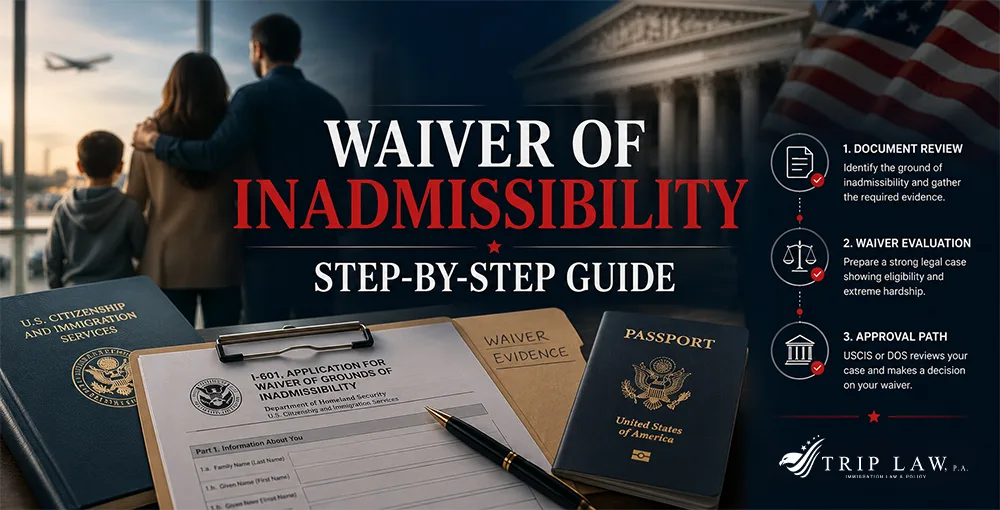
A waiver may be available depending on the specific ground involved. A waiver application can take many months to resolve. Start that process early, never after a denial arrives.
⚠️ WATCH OUT
Never leave a past arrest off your immigration paperwork.
Misrepresentation can create a permanent bar far worse than the original charge.
What Happens If You Miss a USCIS Deadline or RFE
Missing a deadline can end your case without warning. USCIS rarely grants extensions once a deadline has passed.
A Request for Evidence comes with a strict response window. Respond fully, and respond before the deadline listed on the notice. A late response is treated like no response at all. Some applicants also miss USCIS interview notices entirely. An uncollected interview notice does not pause your case. It can lead straight to a denial or an abandonment finding.
Address changes matter just as much as documents do. USCIS mails notices to whatever address sits on file. Update your address the same week you move, every single time. Florida hurricane disasters can sometimes extend certain deadlines. One missed notice can undo months of careful preparation.
Most Form I-290B motions and appeals must be filed within 30 days of the decision, or 33 days if mailed.
Don't Let One Missing Document Sink Your Case.
Trip Law reviews your file before USCIS finds the gaps.
Can a Denied Immigration Application Be Fixed or Appealed
Many denials can be appealed or reopened within thirty days. The right path depends on what actually went wrong.
A motion to reopen works when you have new evidence. A motion to reconsider works when USCIS misapplied the law. Both get filed using Form I-290B in most case types. Naturalization cases use Form N-336 instead of I-290B.
Some applicants choose to refile instead of appealing. Refiling can move faster than waiting on a motion decision. See the official appeals and motions FAQ for how USCIS reviews each option.
The right choice depends on your specific denial reason. Each option carries its own timeline and evidence rules. Appeals to the AAO can take many months to resolve. This is where comparing your options actually helps.
Comparing Your Options After a Denial
| Option | What It Requires | Best Used For |
|---|---|---|
| Motion to reopen | New evidence not in the original file | Cases with fresh documentation |
| Motion to reconsider | Proof USCIS misapplied law or policy | Clear legal or factual errors |
| Refiling the case | A corrected, stronger application | Fixable paperwork or evidence gaps |
| Appeal to AAO | Formal review of the denial record | Complex eligibility disputes |
"A clean record on paper does not always mean a clean federal file. Old charges resurface more often than people expect."
— Florida Immigration Case Review Specialist
How Does an Immigration Attorney Help You Avoid a Denial
An attorney catches gaps before USCIS does. That review alone prevents a large share of avoidable denials. A lawyer reviews your forms against your actual evidence first. They flag missing documents while there is time to fix them. They also flag criminal history before it becomes a surprise.
An attorney knows which RFEs are routine and which signal trouble. Deadlines get tracked on a calendar, not from memory. If a denial happens anyway, an attorney moves fast. That speed often matters more than people realize.
Trip Law also tracks every form version USCIS updates. Outdated forms get rejected just as fast as missing ones. Many clients call us right after their first RFE. We review every case before USCIS ever sees it. Trip Law has handled cases across Lakeland, Tampa, and Orlando.
What To Confirm Before You File Anything
- ✓Every form field is complete, with no blanks left.
- ✓Every signature is in place where required.
- ✓Supporting evidence matches every claim made on the forms.
- ✓Any criminal history has been reviewed with an attorney.
- ✓Your current address is updated with USCIS.
What To Do the Moment You Get a Denial Notice
Worried Your Application Might Get Denied?
Attorney Hardam Tripathi served with the U.S. Air Force JAG Corps, the DEA, and the U.S. Department of State. Trip Law, P.A. has guided clients through visa, residency, and citizenship denials, ensuring proper evidence and swift appeals. Do not navigate this complex process alone.
Call (863) 599-6735 | Free Consultation
1543 Lakeland Hills Blvd, Ste. 17, Lakeland, FL 33805
Frequently Asked Questions
People Also Ask About Immigration Application Denials
Is one mistake going to result in denial?
No, because most mistakes usually result in an RFE, not denial.
Can I resubmit my application immediately after getting a denial?
Yes, re-filing can sometimes be faster than appealing, depending on the reason for denial.
Are all denials from the immigration process eligible for appeal?
No, some kinds of benefits require a motion, not an appeal.
Is there any explanation of why the USCIS denied my application?
Yes, your denial notice will contain the exact reasons for that decision.
Does the NOID mean that the case is denied?
No, you get a fair opportunity to react to the NOID first.
Disclaimer: This article is for general informational purposes and does not form an attorney-client relationship. For help with any immigration issue, reach out to Trip Law.
Worried your case is headed for a denial? Trip Law reviews your forms, evidence, and timeline before you file. Call (863)-599-6735 for a free consultation today.