Immigration Law | Permanent Residency | United States
Hardam Tripathi | TripLaw | Published October 21, 2026 | Updated October 21, 2026
Green Card Renewal Vs. Replacement: What's The Difference?

Learn the key differences between USCIS Green Card renewal and replacement, including required forms like I-90 and eligibility rules.
The main difference is that a Green Card renewal is the process of renewing an existing 10-year Permanent Resident Card that has expired or is about to expire, while a Green Card replacement is the process of getting a new card because of loss, theft, damage, destruction, or error on the previous card or a legal name or biographical change.
Key Takeaways
- Replacement addresses other card problems.
- Both commonly use Form I-90.
- Lost cards can require replacement.
- Stolen cards can require replacement.
- Damaged cards can require replacement.
- Legal name changes can require replacement.
How do renewal and replacement differ?
Renewal updates an expiring Green Card. Replacement creates a new card for another reason. Both processes generally use Form I-90. A Green Card proves your lawful permanent resident status. The physical card also has an expiration date.
An expired card does not automatically end permanent residence. However, you still need valid documentation. You may need a new card for employment. You may also need one for travel. Replacement is different because expiration is not always involved.
For example, your card may be stolen. You could also damage the card accidentally. You might also receive a card with incorrect information. USCIS uses Form I-90 for many situations. The agency names the form Application to Replace Permanent Resident Card.
When Should You Renew Your Green Card?
You should generally renew when your regular Green Card expires soon. USCIS requires Form I-90. You must check your card expiration date. You must avoid last minute filing.
Renewal protects legal status proof. It can also reduce problems with employers and travel. Your filing reason should accurately describe your situation.
You may need renewal when:
- Your Green Card is expired.
- Your Green Card expires within six months.
- Your card will expire soon.
- You need updated physical proof of residence.
USCIS publishes Form I-90 filing instructions. Applicants must review recent instructions before submission.
When Do You Need To Replace Your Green Card?
Replacement applies when your card needs replacing for another reason. Expiration is not necessarily the reason. Common replacement situations include loss, theft, and damage. You may also need replacement after certain information changes.
Examples include a legally changed name. Incorrect information can also require replacement. USCIS specifically allows Form I-90 for these situations. You should describe the reason accurately. Your supporting evidence should match that reason. For example, name changes require evidence. USCIS specifically requests legal name-change evidence.
Green Card Renewal Vs. Replacement: A Quick Comparison
The biggest difference is your reason for filing. Renewal addresses an expiring card. Replacement addresses another card problem. The filing fee depends on current USCIS rules. USCIS currently lists $415 online. Paper filing currently costs $465.
Some applicants may qualify for fee exemptions. Certain cases can also qualify for fee waivers. Always verify fees before filing. USCIS fees can change.
| Feature / Aspect | Green Card Renewal | Green Card Replacement |
|---|---|---|
| Primary Reason | Card is expiring or already expired | Loss, theft, damage, or legal name/info change |
| USCIS Form | Form I-90 | Form I-90 |
| Filing Fee (Online) | $415 (Fee waivers may apply) | $415 (Fee exemptions for DHS error) |
| Filing Fee (Paper) | $465 | $465 |
| Impact on Resident Status | Does not terminate permanent status | Does not terminate permanent status |
How Does The Form I-90 Process Work?
Form I-90 is the primary application for both situations. You must choose the correct reason for filing. The basic process usually involves several steps.
First, identify your Green Card problem. Then select the appropriate Form I-90 reason. Next, prepare your supporting documents. Review every answer before submitting. You can file online when eligible. USCIS accepts paper Form I-90 filings.
USCIS issues receipt notices after submission. Your receipt contains an important case number. You can use that number to check your case. USCIS provides online case-status tools for applicants. USCIS may request additional evidence. It may also schedule biometrics when required.
Need Assistance Navigating Your Form I-90 Filing?
Ensure your application is complete and accurate with clear, direct communication support.
Which documents verify card renewal?
Renewal requires current Green Card details. Your exact evidence depends on your circumstances. Start by gathering your existing card information. Make sure your personal details are accurate.
You should review your:
- Full legal name.
- A-Number.
- Current address.
- Date of birth.
- Green Card expiration date.
If your name changed, provide legal evidence. USCIS specifically instructs applicants to attach name-change evidence. Follow current Form I-90 rules. Rules change over time.
What Documents Do You Need For Green Card Replacement?
Replacement evidence depends on why your card needs replacing. USCIS may require different evidence for different situations. A damaged card may require evidence showing the damage. A name change requires legal documentation.
Lost or stolen cards create a different situation. You should provide the information requested by USCIS. Do not submit unnecessary documents. However, never omit required evidence. USCIS states that Form I-90 supports multiple replacement situations. These include lost and damaged cards.
Does Losing Your Green Card Mean Losing Permanent Residence?
No, losing your physical card does not automatically end permanent residence. The card proves status, but the card itself differs from your status. This distinction is extremely important.
A lawful permanent resident remains a permanent resident. Losing the physical document does not automatically remove that status. However, proving your status can become difficult. You may need replacement documentation quickly.
Therefore, report the problem through the proper USCIS process. Apply for replacement when appropriate. Report missing Green Cards immediately.
What Happens If Your Green Card Is Damaged?
Form I-90 replaces damaged Green Cards. The card's condition determines whether replacement is necessary. Damage can make the card difficult to read. It can also prevent reliable identification. You should avoid altering the card yourself. Do not laminate, cut, or modify it.
Instead, follow USCIS replacement instructions. Keep the damaged card if USCIS requests it. Your filing reason should accurately describe the damage.
What Happens If USCIS Made A Mistake?
USCIS errors can sometimes qualify for a replacement without the normal fee. The specific error must come from DHS. USCIS lists fee exemptions for certain agency errors. This includes cards containing incorrect information because of DHS error.
Review your new card immediately after receiving it. Check every important detail. Look at your name and birth date. Check other identifying information carefully. Contact USCIS if you discover an agency mistake. Few errors qualify for free replacement.
How Much Does Green Card Renewal Or Replacement Cost?
The current standard Form I-90 fee depends on the filing method. USCIS currently lists different online and paper fees. As of the current USCIS fee schedule, the standard amounts are: USCIS lists these amounts in its current fee schedule.
Some applicants may qualify for different treatment. USCIS also identifies certain $0 filing categories. For example, some DHS errors can qualify. Certain other situations may also qualify. Check the current fee schedule before paying. Never rely on an old fee amount.
Figure 1: Form I-90 Cost Comparison Chart
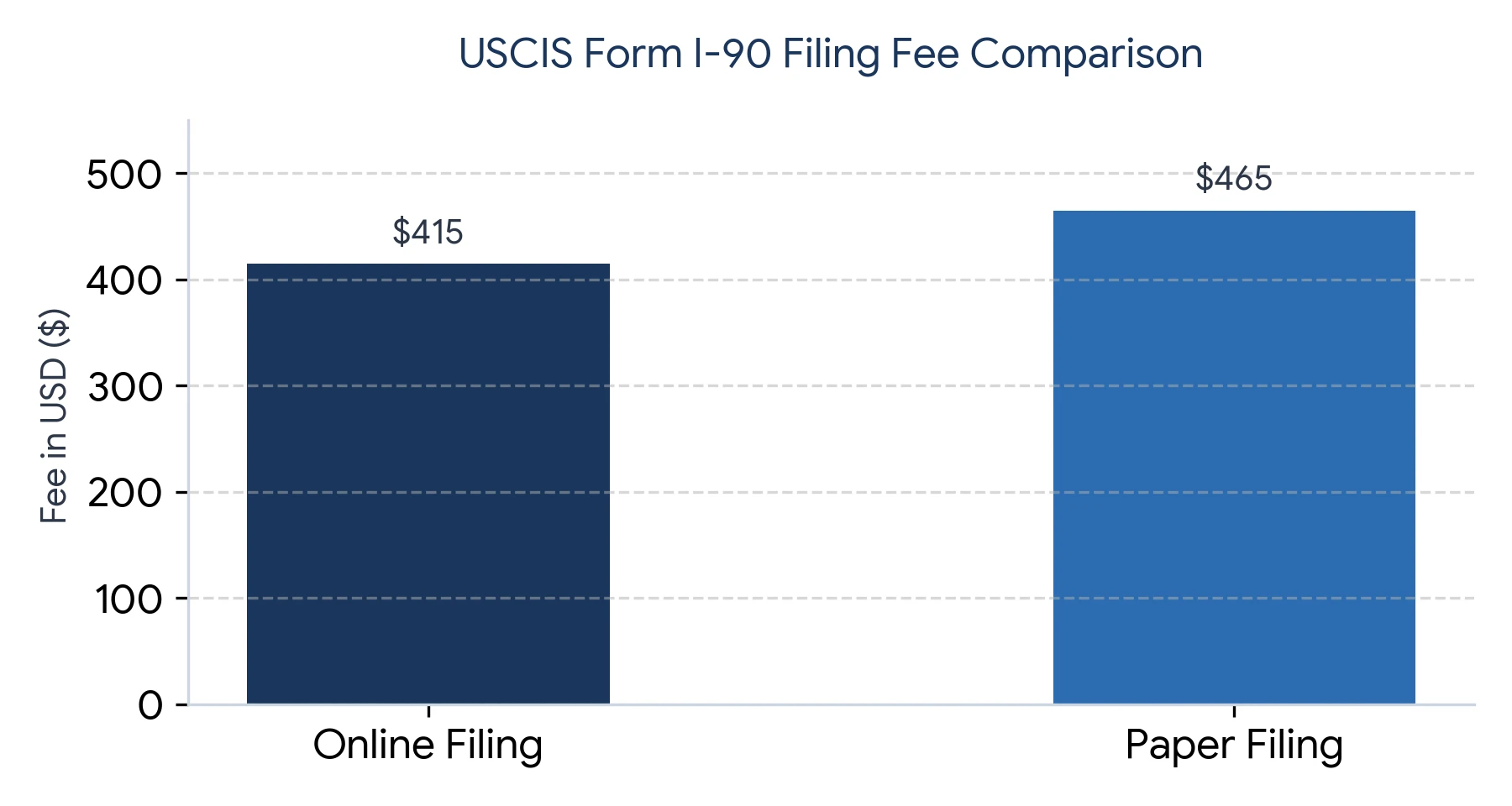
Figure 1: USCIS Form I-90 Filing Fee Comparison between Online Filing ($415) and Paper Filing ($465).
How Long Does Green Card Renewal Or Replacement Take?
Processing times can vary significantly between cases. USCIS processing data shows substantial yearly changes. USCIS reported median Form I-90 wait times. Processing reached 7.9 months by mid-2026.
That figure is a historical median. It does not guarantee your processing time. Some cases finish faster. Other cases can take longer. You should check USCIS processing times directly. Your receipt information can help monitor your case.
USCIS historical data indicates median Form I-90 wait times hovered around 7.9 months in mid-2026, though individual adjudications depend on service center volume and evidence review.
Source: USCIS Case Processing Times
Can You Work While Your Green Card Renewal Is Pending?
An I-90 filing can provide evidence connected with your pending replacement. Your receipt notice can become important documentation. USCIS sends receipt notices after accepted filings. You should keep every notice safely.
The specific proof available to you depends on your case. It also depends on your existing documents. Do not discard your current Green Card after filing. Follow USCIS instructions regarding your documents. Provide valid documents for employer requests.
Can applicants travel during card renewal?
Travel requires careful planning when your physical Green Card expires. Do not assume a pending I-90 alone solves travel issues. Your ability to travel depends on your documents. It also depends on your individual immigration circumstances.
USCIS may provide evidence supporting your permanent resident status. Your receipt notice can be important. However, travel requirements can involve several factors. Airline requirements can also affect your journey. Review USCIS guidance before foreign travel.
What About Conditional Green Card Holders?
Conditional residents have different rules than regular permanent residents. Form I-90 does not replace the required condition-removal process. Conditional residents usually receive two-year cards. Their status requires a separate immigration filing.
USCIS states that conditional residents cannot use I-90. This applies when the card expires soon. Marriage-based conditional residents generally use Form I-751. Investor-based conditional residents generally use Form I-829. Do not treat a conditional card like a standard Green Card.
What Common Mistakes Should You Avoid?
Wrong filing choices trigger many Green Card issues. Thorough preparation eliminates common delays. Common mistakes include choosing the wrong filing reason. Missing supporting evidence can also create problems.
Other mistakes include outdated forms and incorrect fees. Applicants must verify their mailing address. USCIS mails crucial notices. USCIS delivers important documents.
Review these details before Form I-90 submission.
- Confirm your filing reason.
- Use the current USCIS form.
- Review your personal information.
- Check current filing fees.
- Include required supporting evidence.
- Save your receipt notice.
- Monitor your case status.
USCIS publishes official forms online. USCIS shares filing instructions online. Applicants must reject unofficial copies.
Conclusion
Immigration paperwork causes stress. Clear communication guides applicants.
At Trip Law, we help make important information easier. We focus on clear, direct, and accessible communication.
We believe people deserve information they can understand. We also believe important details should never feel overwhelming.
If you need reliable communication support, connect with us. We are ready to help you communicate with confidence.
Trip Law , Clear Messages. Better Connections.
Ready to Communicate with Confidence?
Contact Trip Law today for clear, direct, and accessible solutions.
Need Help With Your Green Card Filing or Immigration Status?
Trip Law helps clients across the United States navigate Form I-90 renewals, replacements, and complex immigration procedures with precision and clarity.
Call (863) 599-6735
1543 Lakeland Hills Blvd, Ste. 17, Lakeland, FL 33805
Free Consultation | trip-law.com
Frequently Asked Questions (FAQs)
Common Questions About Green Card Renewal vs Replacement
Is Green Card Renewal The Same As Replacement?
Both processes differ. Renewal handles expiring cards. Replacement solves other issues. These situations include card loss. These issues include card theft. These problems involve physical damage. These cases involve printed errors.
What Form Do I Use For Green Card Renewal?
Most permanent residents use Form I-90. USCIS uses this application for renewing regular Permanent Resident Cards. Always review current instructions before filing.
What Form Do I Use For Green Card Replacement?
Most replacement requests use Form I-90. Your filing reason determines the supporting evidence required. USCIS provides specific instructions for each filing category.
Can I Replace A Lost Green Card?
Yes. USCIS allows permanent residents to request replacement. A lost Green Card does not automatically end permanent resident status. You should replace the missing document promptly.
Can I Replace A Stolen Green Card?
Yes. A stolen Green Card can generally be replaced. Form I-90 provides the standard process. Keep records related to the theft when appropriate.
Can I Replace A Damaged Green Card?
Yes. USCIS allows replacement of damaged cards. Your application should accurately describe the card's condition. Follow current USCIS evidence instructions carefully.
How Much Does Form I-90 Cost?
USCIS currently lists $415 for online filing. Paper filing currently costs $465. Certain applicants qualify for fee exemptions. Some filers receive fee waivers.
Does A Green Card Expiration End Permanent Residence?
Generally, no. Card expiration does not automatically terminate permanent resident status. However, you still need valid documentation proving your status.
Can Conditional Residents Renew Their Green Cards?
Usually, no. Conditional residents follow different procedures. They generally must file Form I-751 or Form I-829. The correct form depends on their conditional status.
Disclaimer
This blog is for informational purposes only. If you want to know anything in details, please contact Trip Law.