Consular Processing | Administrative Review Guide
What to do after a 221(g), CEAC delay, or stalled visa case | TripLaw | Updated 2026
What to Do If Your Immigration Application Is Stuck in Administrative Processing
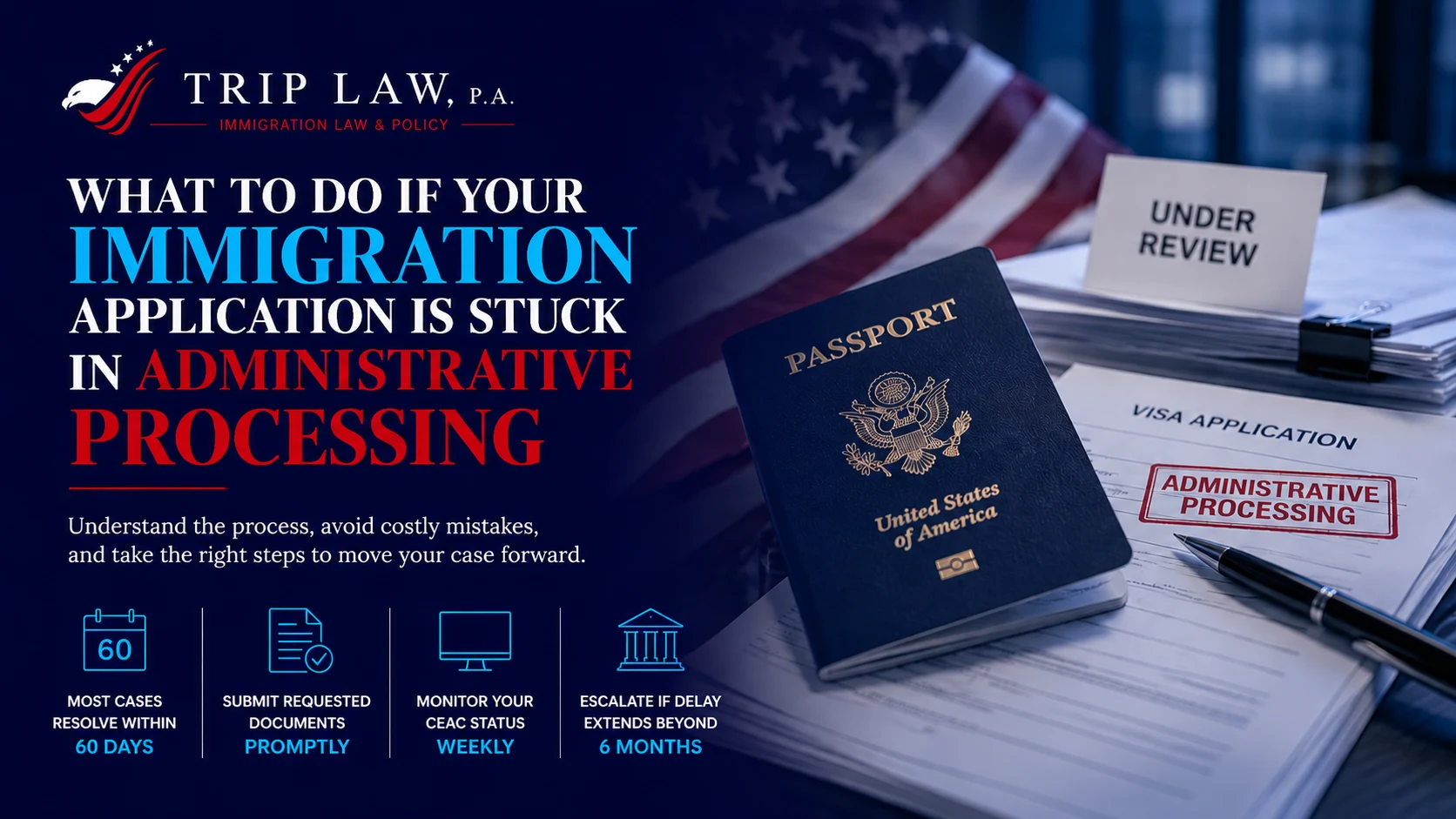
Informative immigration law graphic explaining what to do when a visa or immigration application is stuck in administrative processing, including document submission, CEAC status monitoring, and legal escalation options.
Administrative processing is a temporary review phase that follows your visa interview. It is not a denial. Most cases resolve within 60 days. You can monitor your CEAC status, submit requested documents promptly, and escalate if the wait extends beyond six months.
Key Takeaways
- Administrative processing is not a visa denial. It is a deeper review phase after your interview.
- Most cases resolve within 60 days. Acting too early on inquiries can hurt your progress.
- Monitor your CEAC status weekly and look for a change in the Last Update Date.
- Submit any requested documents the same day to avoid adding weeks to your timeline.
- A Congressional Inquiry or Writ of Mandamus can force action if your case is stuck for months.
- An immigration attorney can identify document gaps before they become a denial reason.
60 Days
Typical resolution window for most administrative processing cases
1+ Year
Maximum wait time in complex security review cases with no fixed legal limit
Many people who want a visa have to deal with a visa delay every year. This happens even when documents look perfect. The truth is simple for everyone. Administrative processing is not a denial. However, it can feel like a nightmare. Here is what is really happening behind the scenes, and what you should do next.
What Usually Happens During Administrative Processing?
Administrative processing begins right after your high-stakes interview. This occurs when the Consular Officer cannot make an immediate decision. Your file moves into a deeper adjudication phase.
What They Check During Administrative Processing
During this stage, multiple government agencies may review your case. The Department of State leads this complex effort. The Department of Homeland Security often joins the review. These checks often include:
- Security background checks across several federal databases.
- Name verification to avoid confusion with watchlisted individuals.
- Employment verification, especially for all technical work visas.
- Education and credentials validation for specialized professional roles.
- Immigration history review, including past refusals or overstays.
- Document authenticity checks, including financial and civil records.
A small job detail error can cause a long visa delay. Your case might undergo a sensitive technology review if applicable. This is common for the TAL, or Technology Alert List, categories.
What Are Common Administrative Challenges?
Beyond the paperwork, several common roadblocks can keep your application from reaching the finish line. But before that, you need to understand what a 221(g) white paper means.
A 221(g) notice is often called a white paper. This paper means your visa is temporarily refused. Under INA Section 221(g), the officer needs more information or further adjudication of your facts. It is not a final denial of your dream. Think of it as a temporary pause.
| Challenge | Impact | What To Do |
|---|---|---|
| Missing/Incomplete Documents | Stops entire case; officer requests additional materials | Submit exactly what is requested the same day |
| Security or Background Flags | Requires manual clearance from agencies in D.C. | Wait for inter-agency review; attorney review helps |
| Administrative Backlogs | Case buried in high-volume queue | Submit status inquiry after the 60-day mark |
| Prior Visa History Issues | Past Section 214(b) refusal triggers deeper review | Prepare consistent documentation across all filings |
| System Errors or Mismatches | Technical glitches delay adjudication without notice | Monitor CEAC status weekly for Last Update Date change |
| No Clear Timeline | Prolonged anxiety; no guidance from consulate | Professional status inquiry email after 60 days |
1. Missing or Incomplete Documents
Even one missing signature can stop your whole case. This includes outdated police certificates or missing employer letters. You must provide exactly what the officer requests. Failure to do so leads to more delays.
2. Security or Background Flags
Applicants with common names face extra scrutiny today. Those in high-tech fields often trigger additional security checks. These flags require manual clearance from agencies in D.C. This process is rarely fast for any applicant.
3. No Clear Timeline or Updates
Consulates do not provide a countdown for your visa. Many applicants feel ignored during this silent waiting period. You might see no changes for several months. This lack of transparency causes high levels of anxiety.
4. Administrative Backlogs
High application volumes often overwhelm the local consular staff. Staffing issues at the embassy can delay your decision. These backlogs have increased significantly in recent years. Your case is simply one in a large pile.
5. Prior Visa History Issues
A past Section 214(b) refusal can cause current delays. This relates to proving your non-immigrant intent to stay. The officer may want to re-examine your past files. Inconsistencies between applications are a massive red flag.
6. System Errors and Mismatches
Internal system errors or database mismatches can delay cases. These technical glitches are never explained to the applicant. They happen more often than the government likes to admit. Some may confuse this with Section 214(b) issues. That section relates to immigrant intent specifically.
More for you: What Happens If You Miss Your USCIS Biometrics Appointment?
What Steps To Take If Immigration Application Is Stuck in Administrative Processing
Taking a proactive approach is the best way to regain control over your timeline. You do not have to sit in silence. There are ways to push back. Here is what actually works for most people:
1. Wait the Initial 60 Days
Most cases resolve within this two-month window. Acting too early can actually hurt your progress. The embassy usually ignores inquiries sent before 60 days. Give the adjudication process some time to work.
2. Monitor Your CEAC Status Regularly
Perform a Consular Electronic Application Center status check weekly. Look for the "Last Update Date" to change. Use your unique Case Number to log in. This shows someone is actually touching your file. A change in date is a very good sign.
3. Submit Requested Documents Immediately
Upload or mail your missing papers the same day. Even a small delay on your end adds weeks. Ensure every document is a clear and high-quality copy. This keeps the officer from asking for it again.
4. Send a Professional Status Inquiry Email
Wait until the 60-day mark has passed first. Draft a polite status inquiry to the specific consulate. Keep your message short and provide all the facts. Do not complain about the long wait time. Be professional to get a professional response.
Must include these 3 things: case number, full name, interview date, and the consulate location.
5. Review Your Case With an Immigration Attorney
A lawyer can find hidden gaps in your file. They check for inconsistencies that you might have missed. Professional help ensures your response is legally sound. This can prevent a simple mistake from becoming a denial.
6. Consider Heavy Escalation Options
If your case is stuck for six months, escalate. A Congressional Inquiry is facilitated by a U.S. Senator. This forces the embassy to provide a formal update. It often restarts a file that was forgotten. If stuck over a year, consider a Writ of Mandamus. This Writ of Mandamus compels the government to decide.
A document audit after the interview is vital. Review your own submission to find potential errors. You can fix them before the consulate flags them.
More for you: Can You Reopen an Immigration Case After a Removal Order?
How Long Does It Take For A CEAC To Change To Approved Once Administrative Processing Is Complete?
Once processing finishes, the status often changes quickly. Many cases move from Administrative Processing to Issued status fast. This usually happens within a few business days. Some may take 1 to 2 weeks total. Final checks might still be pending in the background.
If your application needs to be checked by the FBI, the embassy cannot give you a visa until they get the okay from the FBI. The consul has to wait for the FBI to finish checking your application. This can make the whole process take a lot longer.
Your status may fluctuate between "Refused" and "Administrative Processing." This ping-pong effect indicates the officer has new information but needs a final check before issuing your visa. Additionally, embassies in politically tense regions may halt status updates for months for high-level reviews, regardless of your background or document completeness.
How Do I Know If My 221g Is Approved?
Spotting the right signals will tell you exactly when your wait is finally coming to an end. But first, know why 221(g) takes so long.
These delays happen because of inter-agency review. Your case moves across multiple systems and agencies. Each step depends on security clearance timelines. It also depends on external document verification results. This process is not centralized in one office.
You will know through these specific signs:
- CEAC Status changes to the word "Issued."
- You receive a direct email from the consulate.
- Your passport is requested for the visa stamp.
- You see tracking updates from the courier service.
Did you receive Yellow, Blue, or Pink slips? These colors indicate what the officer needed from you. If your status says "Refused," do not panic yet. A CEAC Status "Refused" does not always mean denial. It often means the case is still in processing.
Preventative Tips To Not Occurring This Again
To reduce future administrative processing delays, follow these simple steps before your next immigration or visa interview.
- Double-check your DS-160 Form for complete accuracy.
- Ensure your I-797 Approval Notice has no errors.
- Keep employment details consistent across all legal forms.
- Provide a clear employment verification letter from HR.
- Include a detailed client contract if you are consulting.
- Always bring extra supporting evidence to your interview.
- Bring certified translations for all non-English documents.
- Disclose your full immigration history very honestly today.
- Prepare clear answers for every possible interview question.
Frequently Asked Questions
Can a visa be rejected after administrative processing?
Yes, the officer can still deny the visa. The review process leads to a final decision.
What is the longest administrative processing can take?
There is no fixed legal limit for this. Some cases extend over a year for security.
Should I contact the embassy about my 221g?
Yes, but wait for the 60-day mark first. Earlier inquiries rarely yield any helpful information today.
What are the chances of approval after 221g?
Many cases are approved after the checks finish. This is likely if no eligibility issues exist.
Is Your Visa Case Stuck in Administrative Processing?
TripLaw helps Florida applicants identify document gaps, communicate with consulates, and push for decisions when timelines become unreasonable.
Call: (863)-599-6735 | Email: Info@trip-law.com
1820 Florida Ave S, Ste. C, Lakeland, FL 33803
Disclaimer: This article is for general informational purposes and does not form an attorney-client relationship. For help with any immigration issue, reach out to Trip Law.